

SAMPLE SPECIFICATION
KELLY SYSTEMS CASH SECURE PNEUMATIC TUBE
SYSTEM
Division 14 - Conveying Systems
Pneumatic Tube Systems - Section 14580
PART
1 - GENERAL
1.1 SUMMARY
A. This section of the specification includes the design,
furnishing and installation of a complete KellyTube Cash
Secure Pneumatic Tube System, as specified herein and shown
on the drawings including supervision of field wiring associated
with the work of this section.
B. The System(s) specified herein shall be complete and
shall not require any additional support equipment or utilities
other than electrical.
C. All work of this section shall be performed in accordance
with the contract documents.
1.2
SYSTEM DESCRIPTION
A. The KellyTube Cash Secure Pneumatic Tube System shall
be 2.25", 3", 4", 6", 8" and 4"x7" oval (as required). Aluminum
single tube vacuum/pressure type, as manufactured by Kelly
Systems, Inc. of Chicago, IL and shall provide dedicated
service between designated stations. Stations shall be located
in the following areas as shown on the drawings, with service
as follows:
VAULT/CASH ROOM TO AND FROM
B. Carrier transmission is accomplished by a central power
unit which shifts between vacuum and pressure operating
modes. The central power unit shall be free-standing type
which is located in the Vault/Cash Room or can also be located
remote from the central station.
C. The System is designed for operation only while a carrier
is in transit between stations, and when carriers have been
queued for dispatch, all controlled by the PC computer.
The System is designed to transport one carrier per operating
cycle at an average speed of 25 feet per second.
D. To dispatch a Carrier from a Sub Station, open the Station
Door and place the Carrier on the Station Pad. Depress the
Send Pushbutton, then close and latch the Station Door.
Vacuum will then propel the carrier to the Central Vault
Station, after which the system will automatically turn
off. If the System is in use when a dispatch is desired,
the Cashier may still initiate a transaction as described
above, and the System Computer will automatically dispatch
the Carrier when the current transaction has completed.
E.
To dispatch a Carrier from the Central Vault/Cash Station,
open the Vault/Cash Station Door and place the Carrier on
the Station Pad. Close and latch the terminal door, select
the desired Sub Station from the destination menu on the
Computer Monitor using the arrow keys, then press Enter.
The Power Unit will dispatch the Carrier on pressure to
the Sub Station and will then automatically turn off. The
Real-Time details of the transaction are displayed on the
Computer Monitor and are fully viewable by Vault Personnel
during the transaction.
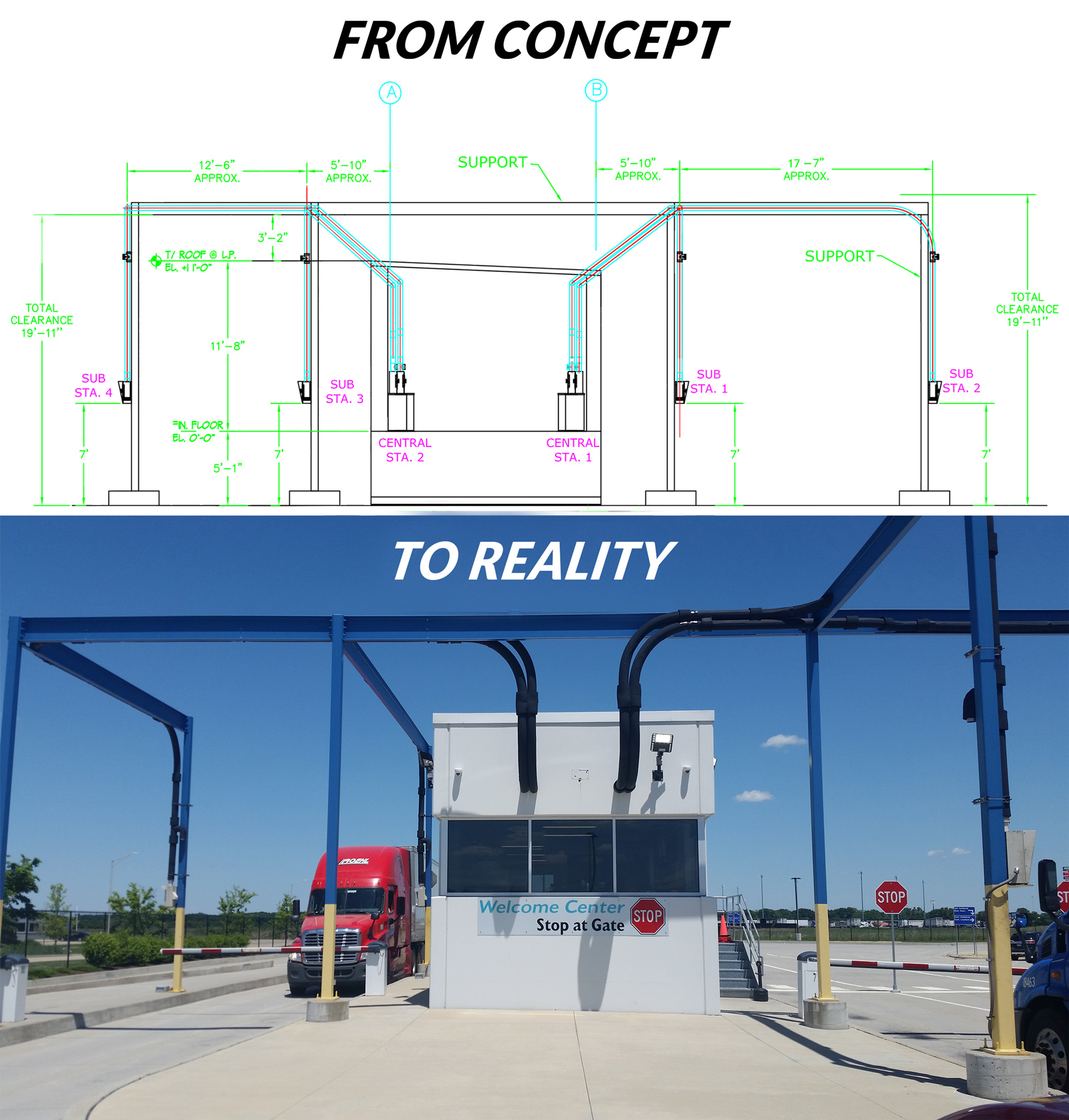
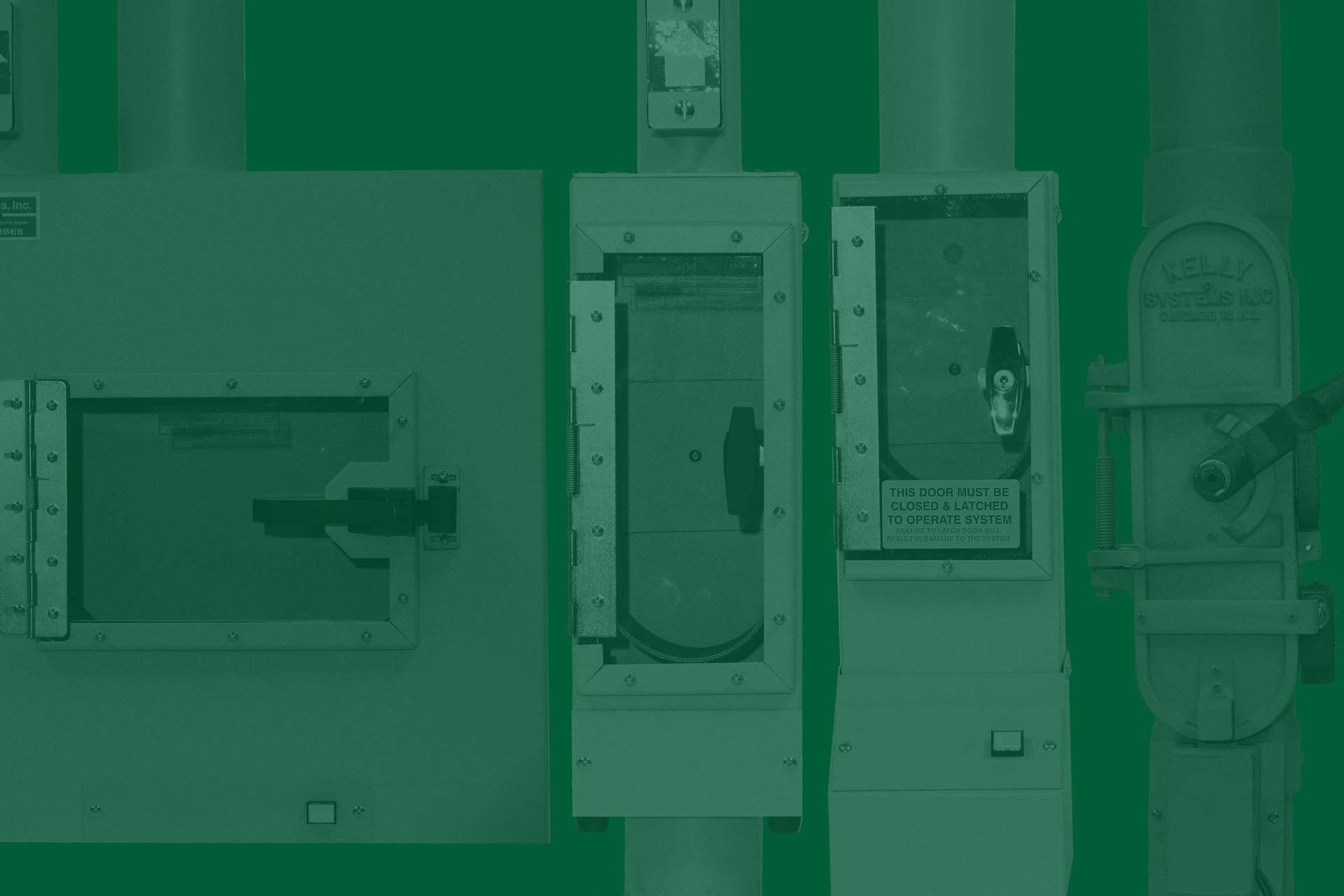
F. All Sub Stations are down-delivery full-access type,
complete with reinforced polycarbonate door. The Doors are
hinged and reinforced with a metal frame. All Sub Stations
are key lockable and have an integral Send Pushbutton and
Indicator Lights. Sub Stations can be wall, floor or counter
mounted, and must maintain a clean appearance throughout.
G. The Kelly Systems Cash Secure Pneumatic Tube System is
fully expandable with the addition of Diverters and Stations
without requiring modification or replacement of existing
equipment or control software.
1.3 SYSTEM SOFTWARE DESIGN
A.
The Control Software and System Features were designed based
on the specific requirements for secure cash handling and
monitoring. To this end, the System was specifically designed
with an easy to use computer with a full color 15 inch monitor
and keyboard. This provides a very understandable, menu
driven operator interface, as well as, allowing for easy
programming changes as needed or requested.
B.
With a full 15 inch display Monitor in plain English, the
display incorporates user hints of how to use the system,
shows real time progress of transactions, and provides audible
and bright color visual displays of system and user errors
with instructions on how to correct these faults. (If the
customer chooses to provide phone or internet connection
to the P.C. then remote diagnostics and maintenance are
possible.)
C. A large Usage History with time and date stamp and transaction
details is incorporated in the Software. Due to the sometimes
critical nature of transaction details, the Software automatically
stores and maintains full information for the last 10,000
transactions. This Transaction History can be displayable
on the screen or output to a printer and can be set to print
any selectable Transaction range.
D. The System will queue transaction requests from all Sub
Stations. When the System is busy with a current transaction,
a Sub Station or multiple Sub Stations may still initiate
their own transactions which the Software will monitor.
As a transaction completes, the Software will automatically
begin the next transaction, initiating each queue in the
sequence in which they were entered. Due to the importance
of Vault/Cash Room transactions, the Vault/Cash Room may
interrupt the queued sequence with a priority dispatch.
When the Vault/Cash transaction is completed, the queued
Carrier dispatches automatically resume.
E. A clock programmable System Purge is supplied to send
any Carriers
inadvertently left in Sub Stations at closing time to the
Vault/Cash Room Safe. Vault/Cash Room personnel can set
the time they want this function performed (e.g. 1:00 AM)
or may disable this function at their discretion.
F. The System Software also provides for a quick transition
from the Day Mode to the Night Mode. When Vault/Cash Room
personnel are present, the System is normally in a Day Mode
which allows for Sending Carriers to the Sub Stations and
Recieving carriers in the accessible Vault Station. When
Vault Room personnel are not present, the System can be
switched to protective Night Mode with the press of a button
on the Keyboard. Carriers from the Sub Stations will then
deliver into a locked Vault. A Password is then required
to switch back to Day Mode which must be entered on the
keyboard. This keeps unauthorized personnel from switching
the Sytem from a protected Night Mode to Day Mode. A clock
programmable Night Vault/Cash mode is incorporated in the
Software to automatically switch the System to Night Mode
at a predetermined time, in the event the last Vault/Casy
personnel for the day forgets to do so.
G. A Carrier Present feature is included so that the Vault/Cash
Personnel can easily see which Sub Stations have carriers
present in them. This is helpful when a money till is called
for, but not promptly removed from the Sub Station. The
Vault/Cash personnel can see this and make a judgement as
to whether to retreive this back to the Vault/Cash Room.
The Retrieve function is controlled at the Vault/Cash Room
so calling out to the Sub Station is unnecessary. This feature
is also useful if the Vault/Cash innadvertently sends a
carrier to the wrong Sub Station.
H. All Send/Receive Stations are equipped with non-contact
highly reliable optical sensors. Thru beam infrared optics
are highly reliable eliminating problems associated with
mechanical contact switches.
I.
All Send/Receive Stations are equipped with Key-Lockable
Doors. This, together with the high strength polycarbonate
doors allow visual recognition of a carriers presence, while
affording strong theft protection.
J.
Sub Stations can easily be disabled through the Software
so that carriers can not be inadvertently or deliberately
sent to inactive Sub Stations. Thru the menu driven configuration,
the Vault/Cash Room can easily turn off a station that is
not being used. This function is password protected.
K. The Software provides Purging of Stations or the entire
System to check for Carriers. The System Maintenance Menu
allows the Vault/Cash Room to Purge any Station individually,
or all Stations sequentially. Either type of Purge can be
cancelled at anytime. Station Purges can be done in either
vacuum or pressure modes.
L. System diagnostics and maintenance are provided to insure
all System equipment is operating properly. The System Maintenance
Menu allows Vault/Cash personnel to position and operate
Diverters, Blower, Air Shifter and Vault Shifter directly
from the keyboard. These maintenance features are invaluable
in serving maintenance needs over the phone. Diverters can
also be moved with vacuum applied to clear Carriers that
may get caught in Diverters. Again, these features are operated
from the keyboard in the Vault/Cash Room.
a. All electrical components are connected with industry
standard RJ45 networking for quick and easy connection of
components. The data runs on U.S.standard 485 protocol.
The System uses distributed 24 volt power so there is no
need for 120 volt power supplied anywhere except in the
Vault/Cash Room.
N. The System Software keeps track of transaction timing
cycles. If a carrier is not delivered to a Sub Station or
the Vault/Cash Station in the requisite time, the System
will automatically apply more time and begin looking for
the Carrier and any System errors. If the Carrier still
does not reach its destination, an error alert will be displayed
and an audible alarm will sound in the Vault/Cash Room.
An error specific message will be displayed with error correction
options for clearing the error. These messages are all displayed
in clear, easy to understand English.
1.4 MATERIALS AND INSTALLATION
A. Tubing and Bends shall be specially manufactured for
pneumatic carrier transmission, fabricated of heavy-duty,
chemically washed
2.25", 3", 4", 6", 8" and 4"x7" oval (as required).
16 gauge continuous welded Aluminum, manufactured to ASTM-B313
and ANSI H35.1 standards, H-26 tempered for maximum resistance
to oxidation and corrosion for indoor or outdoor installation.
Aluminum Tubing and Bends shall be chemically treated for
non-static properties.
B. Each 20 ft. full straight length of tubing shall have
one expanded end for pressure-fit joints. Tubing shall be
securely held in place, and shall be braced against any
motion caused by the passage of carriers. Bends shall be
formed on the centerline to a minimum 36" radius, commensurate
with carrier type and size and shall be of a true circular
cross section throughout, and free from wrinkles or distortions.
C. Field cut tubing and bends shall be joined with tamper-resistant
galvanized electric welded steel pressure fit couplings
of proper dimensions to produce an air tight connection.
When bends are cut in the field for offsets and small angle
turns, the ends shall be cut square and straightened out
by mandrilling to make a smooth connection to the adjoining
piece. Sub Stations and Diverters shall be connected to
Tubing using mechanical bolted couplings for ease of replacement
and maintenance.
D. All pressure joints shall be sealed with a high strength,
medium viscosity aluminum colored, synthetic rubber based
industrial metal sealant to insure airtight connections
throughout. Mechanical joints shall be sealed with high
strength air-tight tape prior to installation of the Coupling.
E. Fittings shall be fabricated steel with the inside milled
to fit snugly on the Tubing. Provide necessary elbows, tees,
coupling sleeves, and other fittings required for proper
installation of the systems.
F.
Tubing and Bends shall be installed and secured with zinc
plated double rod clamps constructed of 1" x 1/8"
cold rolled flat bar steel held together by (2) 5/16"
diameter threaded, zinc plated hanger rods. Single Rod minerallac
type hangers may also be used when Tubing is supported close
to bar joists. Clamps shall be spaced on not greater than
10 foot centers, and shall not have scoring or break joints
to weaken their cross sectional area. Sway bracing shall
be used at the top of each Sub Station riser, at each Diverter
and elsewhere as required to prevent movement from the passage
of carriers.
1.5 STATION TERMINALS
A. The Sub Stations shall be send/receive type constructed
of heavy-duty 14 gauge furniture steel with a washable,
wear resistant, protective powder coat finish. An impact-absorbing
pad shall be built into each terminal to cushion the carrier's
delivery.
B. Sub Station Doors shall be impact resistant transparent
polycarbonate material and shall be 1/4" thick minimum.
The transparent doors shall visually indicate the presence
of carriers. All doors shall be equipped with a heavy-duty
powder coated steel frame, positive action pull-tight lockable
latch, and spring loaded hinge.
C. Delivery-control air diodes shall be provided at each
station terminal location to insure an air-cushioned soft
delivery of carriers. The air diodes shall be designed to
open when sending a carrier to allow for free flow of air,
and close when receiving a carrier to check air flow.
D. All Sub Stations shall be provided with low voltage Class
2 control wiring meeting NEC Article 725 standards. 24 volt
"Send" and "In-Use" illuminated indicating
lights shall be provided which illuminate whenever a carrier
is in transit. A second illuminated pilot shall be provided
at each station terminal that shall illuminate to indicate
the arrival of a carrier. Removal of the carrier will extinguish
the arrival light. All components will be mounted on a PC
Board with R546 connector for easy serviceability. A thru
beam infrared optic will signal carrier presence to the
System Software.
E.
The Vault/Cash Station shall be of the same construction,
materials and design as the Sub Station, with the addition
of a industrial duty positive locking handle.
1.6 CENTRAL POWER UNIT
A. The Central power unit shall be free standing type and
can be located in or remote from the Vault/Cash Room. The
central power units shall consist of one blower, air shifting
mechanism and control panel.
B. One three phase blower shall be supplied that operates
on 208/230/460 volt AC 60 Hz three phase power for increased
efficiency and economy. The Blower shall be in the off mode
except when System is in use. Blower shall be designed to
move sufficient volume of air at vacuum/pressure required
to propel a loaded carrier (2.5 lb. payload capacity) through
a 1200' system at an average speed of approximately 25 feet
per second. Blower shall have a heavy-duty, air-tight, double
chamber, aluminum enclosure. Blower shall be fully enclosed
TEFC with vibration isolators. The blower shall always run
in the same direction and never reverse.
C. The air shifting mechanism shall consist of a vertically
mounted diverter unit complete with rotary motor. Air shifting
mechanism shall alternate between four (4) positions to
allow for vacuum neutral or pressure throughout the system,
as appropriate to propel the carrier to its proper destination.
When the gate is in position 1, the system will operate
on pressure and when in position 2, the system will operate
on vacuum without reversing rotation of the blower. The
air shifting mechanism shall be electrically controlled
by the System Software and shall automatically adjust to
the proper position.
D. The control panel shall consist of a modular relay mounted
on an enclosed printed circuit board for ease of maintenance.
The relay shall be capable of individual removal and replacement,
without the need to replace an entire controller.
1.7 DIVERTERS
A.
All required Station Diverters shall be one-in, four-outlet
type, wired for 24 VDC.
All diverters shall be housed in a metal framed enclosure
and be motor driven. The diverters shall be provided with
(1) full length secured access panel to facilitate maintenance
in the field. Electrical relays contained in the diverter
units shall be modular type for ease of maintenance. Tubing
within the diverters shall be rigid. Offset tubing within
the diverters shall be formed of clear polycarbonate for
visual inspection of carrier blockages with bend radius
sufficient to allow unobstructed carrier passage in either
direction through the diverter. No flexible tubing shall
be used.
B. Each diverter shall be provided with mounting flanges
with appropriate holes to properly accept 3/8" diameter
threaded, zinc plated hanger rods, for direct support and
bracing. Trapeze type hanging arrangements shall not be
allowed unless the diverter is directly bolted to the trapeze.
1.8 CARRIERS
A. Provide a minimum of three (3) carriers per Sub Station.
Carriers shall be Kelly Dura-Built end-opening type, having
an inside diameter of not less than 3", and shall be
available in usable inside lengths ranging from 8"
to 12". Carrier bodies shall be transparent polycarbonate
material, with durable molded polypropylene end cups - one
closed end, and one open end fitted with polyurethane strap-hinged
rubber cover and elastic tab fastener to hold cover securely
closed. End cups shall be fitted with replaceable wear bands
sized to provide an air seal and to sound-deaden carrier
travel through the Tubing.
1.9 SUBMITTALS
A. Submit complete shop drawings for the design of the system.
Submit manufacturer's product data and installation instructions
for each component of the system. Highlight specific areas
in the product literature that demonstrate conformance of
the proposed products with the System Description.
B. Submit operation and maintenance manual data for the
entire system.
( 2 ) sets of instruction manuals shall be furnished to
the owner's representative with each set to include the
following:
1.Thorough installation, operation, and maintenance and
trouble-shooting
instructions.
2. Phone assistance numbers.
1.10 QUALITY ASSURANCE
A. Provide products of a single manufacturer for the entire
installation. Modifications of the tube systems shall be
accomplished with Kelly Systems' standards and the approved
modification procedures.
B. Manufacturer and installer shall have been engaged in
the production and installation of similar type and size
systems for at least ten (10) years with at least five (5)
installations of the same equipment specified. Submit a
list of projects assuring this qualification with bid.
C. System Contractor shall regularly and presently manufacture
and install pneumatic tube systems as its principal business.
1.11 DELIVERY, STORAGE AND HANDLING
A. Deliver all materials to the job site in original, new
and unopened packages bearing the manufacturer's name, label,
product number, etc.
1.12 WARRANTY
A. Provide a written warranty, signed by the manufacturer,
agreeing to repair or replace all work that exhibits defects
in material or workmanship. Normal wear and tear is excluded.
1.13 EXAMINATION
A. Prior to the installation of system components, inspect
conditions at the site to assure that installation may proceed
without interference of the work of other trades. Bring
any conflicts to the attention of the General Contractor
for resolution. Beginning of installation implies acceptance
of conditions.
1.14 CLEANING AND ADJUSTING
A. Remove all installation debris from the site. Clean all
surfaces to be finished by others. Touch up all primers
and finishes that have become scratched or blemished during
installation.
B. Adjust pneumatic tube system to assure smooth operation.
C.
Demonstrate system to available store personnel.
1.15 ELECTRICAL WORK
A. Electrical equipment specified herein shall be provided
complete with motors, control panels, pushbuttons, and 24
v.a.c. interstation wiring. Plug-in type modular components
shall be supplied with printed circuit boards for easy replacement.
(Electrical power wiring to be performed by others).
1.16 STRUCTURAL WORK
A. Alterations to building components, machinery and equipment,
cutting and repair of floors, walls, ceiling and roof openings,
access panels, and the removal and replacement of the ceiling
shall be provided by others.
1.17 TESTING, INSTRUCTION, TRAINING
A. The system shall be operated at a maximum design capacity
for the duration of time as needed and repeated as necessary
to prove to the owner's representative that the system meets
design conditions and is acceptable for full operation.
Allow two hours for on-site training and demonstration.
SAMPLE
SPECIFICATION
KELLY
SYSTEMS AUTOVAC PNEUMATIC TUBE SYSTEM
Division 14 - Conveying Systems
Pneumatic Tube Systems - Section 14580
PART
1 - GENERAL
1.1 SUMMARY
A. This section of the specification includes the design,
furnishing and installation of a complete Autovac Pneumatic
Tube System(s) as specified herein and shown on the drawings
including supervision of field wiring associated with the
work of this section.
B. The System(s) specified herein shall be complete and
shall not require any additional support equipment or utilities
other than electrical.
C. All work of this section shall be performed in accordance
with the contract documents.
1.2
SYSTEM DESCRIPTION
A. The Autovac Pneumatic Tube System(s) shall be 2.25",
3", 4", 6", 8" and 4"x 7" oval (as required). single tube
vacuum/pressure as manufactured by Kelly Systems, Inc. with
dedicated service between designated stations. Stations
shall be located in the following areas as shown on the
drawings with service as follows:
B.
Carrier transmission is accomplished by central power unit(s)
which switch between vacuum and pressure modes. All central
power units shall be free-standing pedestal type which can
be located remote from station terminals, or installed integral
with station terminals as called for herein.
C. The System(s) are designed for operation only while carriers
are in transit between stations, controlled by a time cycle
based on the length of carrier travel between stations.
The Systems are designed to transport one carrier per operating
cycle at an average speed of 25 feet per second.
D. Send/receive terminals shall remain closed and latched
at all times. Carriers may be sent only when station "in
use" signals are inactive. To dispatch a carrier from
a sub station, depress the pushbutton, open the station
door, place a carrier in the tubeline. Vacuum will then
propel the carrier to the power station and will then automatically
time off. To dispatch a carrier from the power station,
place a carrier up in the carrier retainer unit and depress
the pushbutton. There shall be an individual pushbutton
for each sub station in a circuit. The blower will dispatch
a carrier to the sub station and will then automatically
time off.
E. All station terminals shall be recessed down delivery
full-access type, complete with wall flange, reinforced
acrylic door, door lock and recessed pushbuttons and indicator
lights. If called for herein, station terminals can be wall
mounted, but must maintain a clean appearance throughout.
F. The Systems shall be fully expandable with the addition
of either or both diverters and tandem send/receive terminals
without the need to modify or replace existing equipment.
1.3
MATERIALS AND INSTALLATION
A. Tubing and bends shall be heavy-duty, chemically washed
2.25", 3", 4", 6", 8" and 4"x 7" oval (as required). 16
gauge electric resistance welded galvanized steel, manufactured
to ASTM-A787 Standard, flash controlled to .010 maximum,
and shall be specially manufactured for pneumatic carrier
transmission. The System Contractor shall furnish to the
owner a certificate stating that the tubing has been manufactured
in accordance with the above standards.
ALTERNATE:
Tubing and bends shall be heavy-duty, chemically washed
2.25", 3", 4", 6", 8" and 4"x 7" oval (as required). 16
gauge continuous welded aluminum, manufactured to ASTM-B313
and ANSI H35.1 standards, H-26 tempered for maximum resistance
to oxidation and corrosion, and shall be specially manufactured
for pneumatic carrier transmission. The System Contractor
shall furnish to the owner a certificate stating that the
tubing has been manufactured in accordance with the above
standards.
B.
Each full straight length of tubing shall have one expanded
end for pressure-fit joints. Lines shall be securely held
in place, and shall be braced against any motion caused
by the passage of carriers. Bends shall be formed on the
centerline to a 48" radius commensurate with carrier
type and shall be of a true circular cross section throughout,
free from wrinkles or distortions.
C. Field cut tubing and bends shall be joined with galvanized
electric welded steel pressure fit couplings of proper dimensions
to produce an air tight connection. When bends are cut in
the field for offsets and small angle turns, the ends shall
be cut square and straightened out by mandrilling to make
a good connection to the adjoining piece. All indoor joints
shall be completely free of external hardware.
D. All indoor joints shall be sealed with a high strength,
medium viscosity aluminum colored, synthetic rubber based
industrial metal sealant to insure airtight connections
throughout. All outside joints shall be made with an A6354C
two-piece flanged joint coupling. Each end of the tubing
to be joined shall be flared and a rubber "O"
ring shall be placed on each end of the tube between the
flange and the flare to allow for expansion and contraction.
The flange shall be bolted with a minimum of (5) 1/4"
x 2-1/4" bolts.
E.
Fittings shall be fabricated steel with the inside milled
to fit snugly on the tubing. Provide necessary elbows, tees,
coupling sleeves, and other fittings required for proper
installation of the system.
F. Materials furnished shall be free of static electricity.
For security, health and safety reasons, absolutely no PVC
materials shall be used, except for underground or buried
portions of the system.
G. Tubing and bends shall be installed and secured with
zinc plated clamps constructed of 1" x 1/8" cold
rolled flat bar steel held together by (2) 3/8" diameter
threaded, zinc plated hanger rods. Clamps shall be spaced
on not greater than 12-1/2 foot centers, and shall not have
scoring or break joints to weaken their cross sectional
area. Clamps shall be two-piece, each formed in a semicircular
shape to fit snuggly above and below the tubing respectively.
Each piece shall make firm contact with the outside wall
of the tubing.
1.4
STATION TERMINALS
A. All station terminals shall be send/receive type constructed
of heavy-duty 12 gauge furniture steel with a beige wear
resistant powder coat protective finish. The dimensions
shall allow for the use of at least three (3) carriers.
A Burtek 328F sling shall be built into each terminal to
cushion the carrier's delivery.
B. The doors shall be impact resistant of transparent acrylic
material and shall be 1/4" thick minimum. The transparent
doors shall visually indicate the arrival of incoming carriers.
All doors shall be equipped with a heavy-duty chrome plated
steel frame, positive cam action pull-tight latch, and spring
loaded hinge.
C. All station terminals shall be specifically designed
and manufactured for recessed in-wall mounting. Heavy gauge
steel wall flanges shall be welded to the top, bottom and
sides of the terminals and shall be spaced back from the
leading edge of the terminals an appropriate distance to
insure that the face of the terminals are flush mounted
with the finished wall. Shadow boxing or enlarged wall openings
extending beyond the outer edges of the terminals are prohibited.
ALTERNATE:
Station terminals shall be specifically designed and manufactured
for surface mounting on the face of walls or on desks or
similar counter-top arrangements, and shall be free of sharp
edges.
D. Air diodes shall be provided at each station terminal
location to insure an air-cushioned soft delivery of carriers.
The air diodes shall be designed to open when sending a
carrier to allow for free flow of air, and close when receiving
a carrier to block air flow.
E. All station terminals shall be provided with low voltage
Class 2 control wiring meeting NEC Article 725 standards.
24 volt "Send" and "In-Use" illuminated
pushbuttons shall be provided which are depressed to send
a carrier, and which illuminate whenever a carrier is in
transit. An optional second illuminated push button shall
also be provided at owner's request, at each station terminal
that shall illuminate to indicate the arrival of a carrier.
When the button is depressed, the light will extinguish.
All pushbuttons shall be recessed mounted in the face of
the station terminals and shall be fully accessible for
ease of maintenance.
1.5
CENTRAL POWER UNIT
A. All central power units shall be free standing pedestal
type which can be located remote from station terminals
or installed integral with station terminals. The central
power units shall be constructed of heavy-duty furniture
steel with the same finish as the station terminals. The
central power units shall be lined with acoustical material
for sound absorption and shall contain one blower pack,
air shifting mechanism and control panel. Central power
units shall be full access type having two (2) secured removable
access panels that provide access to the top and front of
the units.
B. One blower pack shall be contained in the control power
units and shall operate on 120 volt AC 60 Hz single phase
power for increased efficiency and economy and shall consist
of a maximum of two (2) blowers that will operate simultaneously
(in the same mode) when the system is in operation. Blowers
shall be in the off mode except when System is in use. Blower
packs shall be capable of providing the specified carrier
speed under loaded conditions. Blower packs shall have a
heavy-duty, air-tight, double chamber, steel enclosure and
be provided with a secured removable access panel. Blower
packs shall be fully enclosed within the central power units
complete with vibration isolators. The blowers within the
blower packs shall always run in the same direction and
never reverse.
C. The air shifting mechanisms shall consist of a heavy
gauge cast aluminum 4-port valve complete with diode gate
and rotary motor. Air shifting mechanisms shall alternate
between two (2) positions to allow for vacuum or pressure
throughout the system, as appropriate, to propel the carrier
to its proper destination. When the diode gate is in position
1, the system will operate on pressure and when in position
2, the system will operate on vacuum, without reversing
the direction of the blowers. The air shifting mechanisms
shall be electrically controlled via the station terminal
push buttons, and shall automatically adjust to the proper
position.
D. The control panel shall consist of appropriate plug-in
type modular relays, timers, etc. mounted on an enclosed
printed circuit board for ease of maintenance. The plug-in
relays and timers shall be capable of individual removal
and replacement, without the need to replace an entire printed
circuit board or substrate. The timer shall be adjustable
to allow for appropriate timing cycles.
1.6 DIVERTERS
A.
All required system diverters shall be one in, four (4)
outlet type, wired to 120 volt single phase power. All diverters
shall be housed in a heavy-duty enclosure, and be motor
driven, airless operated units. The diverters shall be provided
with full length secured access panels for ease of maintenance.
Electrical relays contained in the diverter units shall
be modular plug-in type for ease of maintenance. Tubing
within the diverters shall be rigid throughout with no flexible
portions.
B. Each diverter shall be provided with integral mounting
flanges with appropriate holes to properly accept 3/8"
diameter threaded, zinc plated hanger rods, for direct support
and security. Trapeze type hanging arrangements shall not
be allowed unless the diverter is directly bolted to the
trapeze.
1.7
CARRIERS
A.
Provide a minimum of three (3) carriers per station terminal.
Carriers shall be bi-directional and shall be available
in multiple inside lengths ranging from 8" to 14".
Carriers shall have expanded glider sections on each end
with protective ribs to protect the gliders.
1.8
SUBMITTALS
A.
Submit complete shop drawings for the design of the system.
Include complete data on the equipment including physical
dimensions, location of all components of the system and
their relationship to all architectural, structural, security
equipment, mechanical, electrical, fireproofing, fire protection,
piping or other components adjacent to the proposed system
location, performance capabilities and limitations, and
schedules indicating locations when more than one type of
an item is to be used. Indicate all bends, radii, clearances
and other conditions that might interfere with the work
of other trades or require special coordination by the General
Contractor. Show how all components of the terminals are
to be recessed from view.
B. Submit manufacturer's product data and installation instructions
for each component of the system. Highlight specific areas
in the product literature that demonstrate conformance of
the proposed products with the System Description.
C. Submit operation and maintenance manual data for the
entire system.
( 6 ) sets of instruction manuals shall be furnished to
the owner's representative with each set to include the
following:
1. Manufacturer's Parts List identified with the make, model
and serial number of the equipment furnished.
2. Control and wiring diagrams.
3. Installation, operation, and maintenance instructions.
4. Manufacturer's recommended spare parts list.
1.9
QUALITY ASSURANCE
A. Provide products of a single manufacturer for the entire
installation. Modifications of the tube systems shall be
accomplished with Kelly Systems' standards and the approved
modification procedures.
B. Manufacturer and installer shall have been engaged in
the production and installation of similar type and size
systems for at least ten (10) years with at least five (5)
installations of the same equipment specified, in correctional
institutions. Submit a list of projects assuring this qualification
with bid.
C. System Contractor shall regularly and presently manufacture
and install pneumatic tube systems as its principal business.
1.10
DELIVERY, STORAGE AND HANDLING
A. Deliver all materials to the job site in original, new
and unopened packages bearing the manufacturer's name, label,
product number, etc.
1.11
WARRANTY
A. Provide a written warranty, signed by the manufacturer,
agreeing to repair or replace all work that exhibits defects
in material or workmanship. Normal wear and tear are excluded.
1.12
EXAMINATION
A. Prior to the installation of system components, inspect
conditions at the site to assure that installation may proceed
without interference of the work of other trades. Bring
any conflicts to the attention of the General Contractor
for resolution. Beginning of installation implies acceptance
of conditions.
1.13
CLEANING AND ADJUSTING
A. Remove all installation debris from the site. Clean all
surfaces to be finished by others. Touch up all primers
and finishes that have become scratched or blemished during
installation.
B. Adjust pneumatic tube system to assure smooth operation.
1.14
ELECTRICAL
A. Electrical equipment specified herein shall be provided
complete with motors, control panels, pushbuttons, and 24
v.a.c. interstation wiring. Plug-in type modular components
shall be supplied with printed circuit boards for easy replacement.
B.
Electrical power supply to the central power units and diverters
shall be 115 v.a.c. with 20 amp dedicated service and will
be supplied by others. 24 volt interstation wiring of the
system shall also be performed by others in compliance with
the local governing electric code.
1.15
STRUCTURAL WORK
A.
Alterations to building components, machinery and equipment,
cutting and repair of floors, walls, ceiling and roof openings,
access panels, and the removal and replacement of the ceiling
shall be provided by others.
1.16
AS-BUILT DRAWINGS
A.
A record shall be kept of all deviations in location or
elevation of any concealed installations from that shown
on the contract drawings. Records shall also be kept of
any significant changes in installations from approved shop
drawings or contract drawings. Records shall consist of
marked shop, or contract drawings and shall be submitted
to the owner's representative at any time upon request during
or after completion of construction. No such deviation from
the contract drawings or approved shop drawings shall be
made without prior approval by the owner's representative.
1.17
TESTING, INSTRUCTION, TRAINING
A.
The system shall be operated at a maximum design capacity
for the duration of time as needed and repeated as necessary
to prove to the owner's representative that the system meets
design conditions and is acceptable for full operation.
Allow four hours for on-site training and demonstration.